 中文


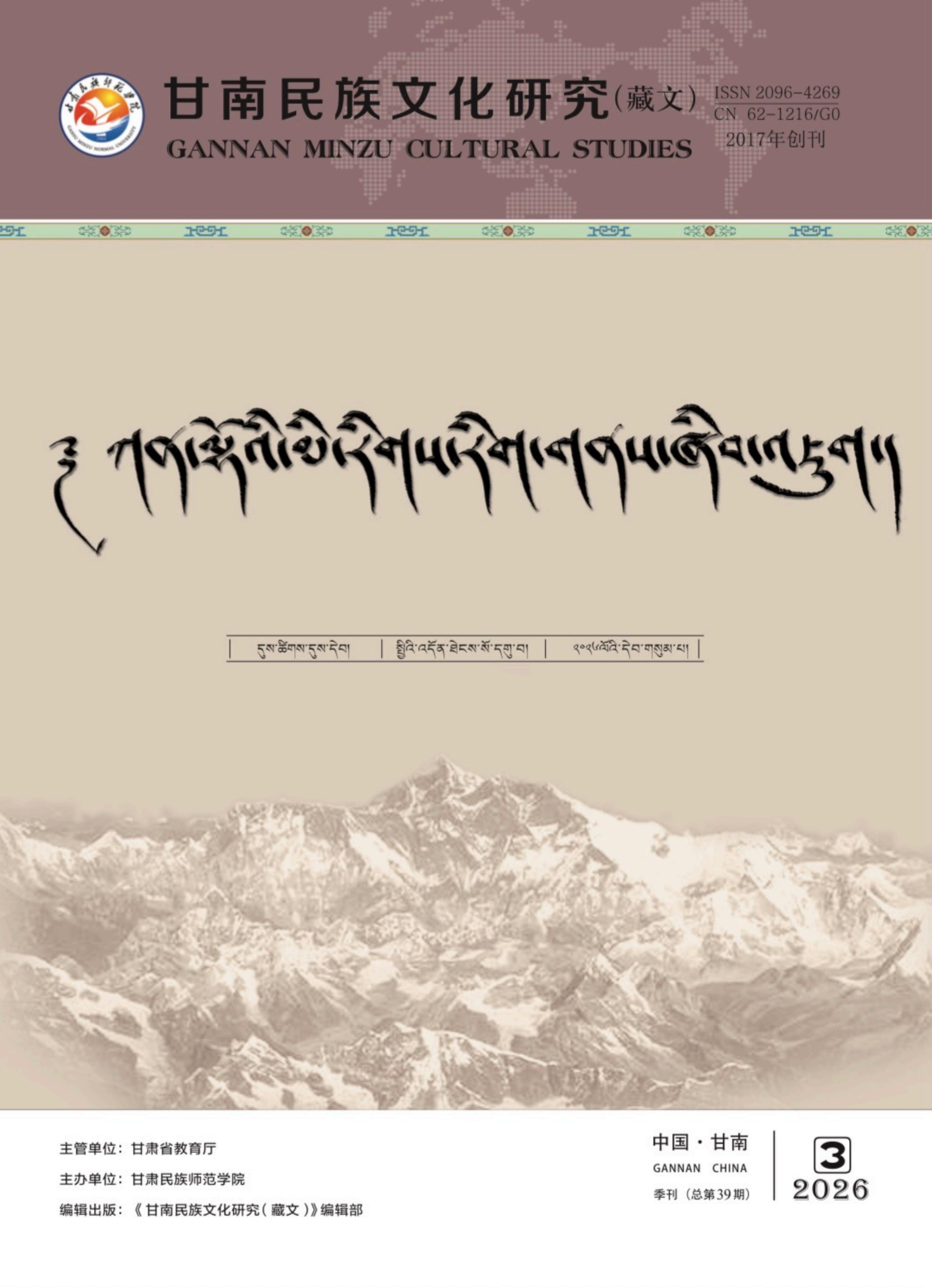
Gannan Minzu Cultural Studies

- :2017
- :Quarterly
- ISSN: 2096-4269
- :CN 62-1216/G0
- :54-200
- :
- :
该翻译结果由
 提供平台支持,由DeepSeek 模型实际翻译
Issue 3 , 2026
Centering on the Main Thread of Forging a Strong Sense of Community for the Chinese Nation and Creating a New Situation in Tibetan Studies
[Huo Wei[1], Kuan Taiji[2]]
(1-5)


bum khang ri khrod
(6-8)
Exploring the Glo Region through "The Biography of ngor chen kun dga' bzang bo"
[Gengdeng Sanmudan[1], Wangzha[1]]
(9-22)
A Preliminary Study on the Sanskrit Manuscript Acintak ramopadeśa of Rtse Gdong Monastery
[Daoji Cairang[1], Lamaojie[2]]
(23-37)
An Analysis of the Relationship between AI Painting Technology and Traditional Thangka Art——Taking Gan-Tangka Art as an Example
[Danzeng[1]]
(38-48)
A Study on the Spiritual Lineage of Dekhi Jamyang Thubten Nyima and His Dharma Propagation in the Mongolian Plateau
[Lamaojia[1]]
(49-59)
The Theory that the Name "Xiangxiong" Originates from the Surnames Bya and Khyung.
[Gazang Zhaxi[1], CairangJi[2]]
(60-70)
A Comparison and Lineage of Negation Theories in Smra sgo mtshon bya and Ldog pa bsdus pa
[Bianba Duoji[1]]
(71-79)
An Investigation into the Origin and Evolution of the Tibetan Sentence-Final Particle 'yin' and'red' from the Perspective of Language Development
[Cairang Zhaxi[1], WuJihe[1]]
(80-90)
A Study on the Creative Phenomenon of Stag vbum rgyal's "Dog Series" Novels
[Huadan Jiancuo[1]]
(91-100)
A Brief Analysis of the Development and Artistic Techniques in Contemporary Tibetan Women Writers' Fiction
[Zimai Cuo[1], Genggao Cairang[1]]
(101-108)
A Study on Herdsman Narratives in Puhua Jia's Novels
[Langga Lamu[1]]
(109-117)
A Study on the Concepts of Contemporary Tibetan Prose and Related Issues——Taking the Selected Texts in Tibetan Language Textbooks for Senior High Schools in Five Provinces and Regions as Examples
[Zhaxi Dongzhi[1]]
(118-130)
Research on the Four Great Elements in Tibetan Buddhist Logic
[Zhonggejia[1]]
(131-138)
A Multi-dimensional Study on Journal Classification Methods
[Cairang Zhaxi[1]]
(139-149)